It seems as though this summer wanted to give it's film-goers as many heart palpations in as many places as possible. We've got heart palpitations in space (Gravity), heart palpitations in the suburbs (Prisoners), and heart palpitations on a racetrack (Rush). But as intense movies go, there's always one that just stand out from the rest. The one that just gets right under your skin to make a grown man curl into the fetal position and cry "You fool! Don't do it!" The movie that gets the title of "Most Heart Palpitating Movie of the Summer, Like, No Joke, I literally Cried" goes to Paul Greengrass's Captain Phillips.
Now, Paul Greengrass movies have always been about motion and intensity (cough cough Bourne), whether it'd be translated into the writing or the shakey camera cinematography (if you thought the Bourne movies had the shakey camera thing down, try that on a boat and you will feel seasick). But this movie is different for two reasons: one, this is his first "based on a true story" movie (even though the real life Captain Phillips was much more douchey than in the movie); two, this is the first time in a Paul Greengrass movie where acting seemed to be the priority.
Now, say what you may about the Bourne movies and Matt Damon being incredible, that's fine. He was. But the Bourne movies' focus was more about the complex story and finding the true identity of Jason Bourne. For Captain Phillips, on the other hand, we know how it's going to end. It was a headlining news story. There was even a book written by the captain himself. We know he would live and that the bad guys bite the bullet (no pun intended).
But the beauty of this movie is that it's directed as though we don't know that. He wants us, the audience, the feel every tense minute in that movie as though we were on that ship being tracked down by the pirates, and the acting really solidifies this.
Tom Hanks is obviously taking the cake for this movie. His acting ability is unmatched in this role. It's not that fact that's he going all out all the time (cough cough Forest Gump), but it's more the subtleness of his fear and anxiety. It's obvious that he's trying to stay calm and trying to be one step ahead of the pirates, but if you look at his face you can just hear him crying out in his head "If you f**k this up, we're all going to die." That's impressive acting, when you can tell your whole situation just by your face.
But Tom Hanks isn't the only power-house actor. Let's take a look at the Somali pirates, and how I had to remind myself that they were not really Somali pirates. I'm being very serious in saying that they literally look, act, talk, walk, and even feel like they were from the coasts of the crime-ridden Somalia, which, when you look into it, is sort of true. The main pirate was born in Somalia, raised in Yemen, then moved to America. Talk about typecasting all you want, but this guy deserves an insane amount of praise for his role. He just may end up sharing an Oscar nod along with Hanks (which will happen. Don't lie to yourself, this movie was made to woo the Academy Awards).
I give this movie:
9.5/10 for quality (-0.5 for shaky camera) 10/10 for watchability (Only for the first viewing. You might want to collect your wits before braving it again.)
I hope you all enjoyed my review of Captain Phillips.
Fond regards,
~Grant Dunderman
October 2013
Film Studies Period 10
Come one, come all! Come see the next great American classic: Rock Bottom!
The story starts off with Frank, played by Gary Cooper. A successful business man, Frank's wealth and power shadow over his intense demeanor and unanimous detest by his associates and clients. This all changes suddenly when the stock market crash causes Frank to lose his job. Without work and power, he prowls the streets of Chicago, lonely, sad, and without any support by those who have always hated him. But, a silver lining appears as Frank comes across Vivian, played by Claudette Colbert, a close friend of his from high school. Having remembered Frank from the grand memories of the years before, Vivian looks past his coldness and welcomes him into her blue-collared family. With the help of her mentor Maxwell, played by Sam Jaffe, Vivian teaches Frank the cultures and values of those who never made it to the high life. Will Frank accept these values? Will he be the same, cold man as he was for many years, or will he change himself through the care of Vivian? And, is Vivian helping him because he was a good friend, or is there something more? Find out in what is called "the best movie of the year"!
From the desk of Colombia Pictures:
Colombia Pictures is honored to present Frank Capra's latest film, Rock Bottom. We have always admired Capra's solid directing capabilities and his ability to engage the audience in timeless tales. We also greatly admire each of the stars and their roles. Gary Cooper, Claudette Colbert, and Sam Jaffe have all been a part of Colombia Pictures's films, and we have to say that they all put on a stellar performance. We also are honored with having Joseph Walker as head cinematographer, as his status in the American Society of Cinematographers really had an impression on us. His attention to various shots, long and close, in this movie in fantastic, and even though it is still in black and white he was still able to capture the essence of strong emotion through his meticulous lighting. Now, because this is a bit of a darker drama, our production studio had to regulate some of the original content of the film. For instance, there is moment where Frank denounces God during his plight of depression and downtrodden. Obviously, this scene was removed, and instead we were given a beautiful prayer scene in which Maxwell leads the blue-collar family in grace and Frank was so moved by the end that he begins to tear up. So rest assured, our production office ensured that this film followed the code.
We hope you enjoy this fantastic production of Rock Bottom!
Fond regards,
~Grant Dunderman
October 2013
Film Studies Period 10
(Before I begin, I'm want to make this very clear: All of the Saw films that I reference to or display in this article may contain brutal, graphic, and sometimes disgusting imagery. For those with a faint of heart, or for those who just don't feel like reading about this during a meal, I would tread lightly while reading this.)
Alright, well here it is. The moment of truth. The answer we've all been waiting for. The personal testament to the ordeal that only a few have dared ventured to. Don't get me wrong, I know could've done something else. I could've done a Formal Film Study on Quentin Tarantino, Dreamworks, or movies with talking animals. But I chose this. So here it is.
The first Formal Film Study of all seven Saw movies.
Now, obviously I'm going to go through this study a little bit differently. While most film studies in this class focus on several different movies with connecting themes, I'm stuck with seven movies that are essentially the same that have to be connected. Why do they have to be connected? Well, I'll get that later, trust me. There's a lot to talk about in these movies, and I'll make sure to save my personal opinion for the finale.
But to start things off, let's take a brief history lesson of the successful horror franchise of all time.
HISTORY:
The original idea behind Saw is credited to two Australian film school graduates, James Wan and Leigh Whannell. After tossing around ideas, and drawing inspiration from The Blair Witch Project and Darren Aronofsky's Pi, the two decided to try to get their idea into form. After failing to get proper funding from various studios in Sydney, and realizing that their initial budget of $30,000 would not be enough, they were convinced by their agent to go to Los Angeles to find a studio.
In order to get the studios' attention to the project, Whannell provided $5,000 to make a seven-minute short film based on one of the traps from the original script. With Whannell playing the main role, and Wan shooting with a 16mm camera, it took the duo two days, with some assistance, to make the short.
With the script and short bundled and out, they soon got the attention from studios and producers. I didn't take long for Gregg Hoffman, producer and co-founder of the then-new Twisted Pictures, to take specific interest. The movie was signed, and, after a couple of mortgages from the independent producers, had a now reasonable budget of $1 million.
The original Saw short is below. (Even though the amount of blood/gore is very much absent compared to the later movies the film's content is still horrific. Viewer discretion is advised.)
Now, enough of the history (you can find the rest of that on Wikipedia). It's time to cut deep into the Saw films.
WRITING AND PLOT:
Now, I know that you may not trust me on this. You might be thinking, "Writing? Plot?! C'mon, Grant. Saw is just torture porn." And I wouldn't blame you just by looking at the posters.
Blood, Gore, and Torture
Blood, Gore, and Torture 2
Blood, Gore, and Torture IN 3D!!!!
But hear me out when I say that there is more to this franchise than you could ever imagine. No, really, I'm being dead serious here. This is the most plot-centered and and most twist-heavy (as in Shymalan plot twist) horror film series there is.
Don't believe me? Well, kudos to you for thinking with a logical brain. But in honesty, I'm not lying.
There's a great article online called "The Shocking Complexity of the Saw Movies" and it lists a few reasons as to why these films are so tightly plotted. (Some spoilers warning)
In Saw III, we see a character read a letter and burst into tears, shortly before flying into a homicidal rage. We don’t learn who wrote this letter until Saw IV. We don’t learn what it said until Saw VI.
Saw III shows us the five minutes immediately after the end of Saw II. Saw IV shows us what happens immediately after THAT.
Saw IV actually takes place during the events of Saw III, which is only revealed when a character from Saw IV literally walks into the final scene of Saw III, about two seconds after the previous film cut to black.
Saw V picks up about thirty seconds after Saw III.
You see the traps from Saw I being set up in flashback sequences during Saws III and V. You see the traps from Saw II being set up in flashback sequences during Saws III and V. You see the traps from Saw III being set up in flashback sequences during Saws V and VI. And I’m not talking about merely reusing footage – I’m saying that the latter movies recreated earlier sets and brought back actors who were chronologically deceased, to show us new information about things we’d already seen.
After the credits of Saw VI, you see something that took place between the events of Saws II and III.
The main villain, Jigsaw, dies at the end of Saw III, and yet the events of all the subsequent movies are planned by him. And no, there’s nothing supernatural about it.
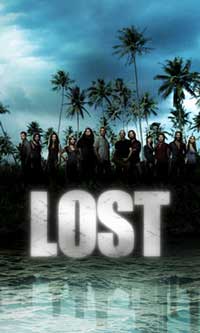
Good lord! What is this? This is just as complicated and confusing as Lost...which is probably why they did this. The article later states that Hollywood learned a lesson from that television series in regards that "audiences could be enthralled, not repelled, by huge mysteries that unfolded over years...The Saw producers took this lesson to heart, and built the Saw sequels to be full of twists, complete with Lost-esque flashbacks and lots of loose ends."
Hello Jack. I want to play a game.
Well, that's all fine and dandy, but does that really entail good screenwriting? Well, yes and no. At it's core, it's still a shock slasher series, and there's not much complication in a script to say "scream loudly". But aside from that, there was an aspect of the plot, asides from it's twists and turns, that stood out for me: Jigsaw, the main villain.
Jigsaw, aka John Kramer, aka the guy you don't break the rules with, has a very specific method to his madness. The source of his reign of terror doesn't stem from maniacal rage or vengeance on society, but rather a bunch of experiments. He's an engineer by training, and you can see it in his traps, but everything he designs has a purpose for every specific subject, and, more importantly, they each have a way out that requires them to sacrifice something from themselves, be it bloodshed or ridiculous amounts of bloodshed. "How much blood will you shed to stay alive," Jigsaw would say to his game-players. He's not downright killing innocent people. He takes people who takes their life for granted and plants them in these "games". If they win, they live, and ultimately end up with a feeling of grateful appreciation towards their lives (some judge whether this is true or not in the films). If they lose, they die (quite spectacularly at times). It's all about testing the capabilities of the human survival instinct.
Now with all that in mind, I still want to make it clear that this isn't a franchise that you'd casually watch with your girlfriend/boyfriend every Friday night. It still brutal as it's said to be, with all of the traps and such. Which brings me to my next point:
THE TRAPS
I'm not going to spend a whole bunch of time on this. Frankly, I'd rather discourage some people from even knowing about what some of these traps do. But I have to mention it. It's the Saw series! This is what half of the movies are.
What I'll say about the traps is this: I'm very impressed by the studios production of them. For each trap, they put in a ridiculous amount of time and effort into all of them and made sure they were safe for the actors and that they looked convincing enough on-screen. Below are examples of the creation and production of several traps. (Warning: Some language involved, plus the imagery might be horrific for the faint of heart. Viewer discretion is advised.)
CLOSING THOUGHTS
In my opinion, I think the Saw franchise does deserve all of its cultural glory that it has received. Sure, it can be gruesome, but that's what it's supposed to be. And after watching them all by myself, I realize that the real fun in these movies come from watching it with a crowd or maybe even a few friends, just to share that collective feeling of "EW! Gross! Did you see that?!" I would not recommend theses films to be watched by everyone, but I'm stopping everyone either. I just wanted to show to you all that if you took out all of the blood, gore, and torture you'd be left with a pretty neat and thrilling series (even though it would only be about 60 minutes).
So, the Saw films aren't horror masterpieces, that's for sure, but they have enough depth to them that the audience can relate to and for the fans of the series to talk about on the message boards until the next installment is released. (Which it will. I ain't buying that whole "Final Chapter" nonsense from Saw 3D. No sir! I'll be going to the midnight premires of Saw 8-12, and there's not a damn thing you can do about it!)
Fond regards,
~Grant Dunderman
October 2013
Film Studies Period 10
P.S. For those of you who felt a little shaken after watching the clips above, have some puppies. You deserve them.
Good bad movies have become an important part of film culture. From Ed Wood to Tommy Wiseau, some men have that misguided drive of filmmaking that results in messy, confusing, and contorted attempts at art. But, if they're good enough (or, bad enough), it will spark a cult following full of midnight screenings, hilarity, and good times for all, as evident from movies like The Room, Rocky Horror Picture Show, and any Mystery Science 3000 screening.
It had come to my attention that another film was graciously to this list, a movie entitle Bidemic: Shock and Terror. From the title alone, I knew I was in for one heck of a ride. It's not like I was oblivious to this film; I had previously dug up some info about this movie from various critics and humor sites, one of which stated that the movie will "change your life." Obviously this got my attention, so I decided "Hey, why not? It's probably better than sitting in front of YouTube all day anyway." So on to Netflix I went, pulled up Birdemic, gathered a bowl Cheez-its and pretzels, and sat through it, beginning to end.
Oh, boy. Ooooooooh, boy. Oof, they were right when they said it'll change your life, but in all the wrong reasons.
Lemme break it down for you.
The story:
The first act of the story follows Rod, a software salesman, living his successful life in his suburban home. That's it. I mean, really, that's all there is to it in the first act. The first three minutes of opening credits are just of him driving in a highway. They even get a shot of him filling his tank with gas. Look, I know that setting the mood of the scene, but you don't do that with stock footage of reality TV shows.
I mean, there is this romantic subplot between Rod and a fashion model named Natalie, but that's hardly as interesting as Roddy buying a pack of gum.
Speaking of which, before I move on I need to address this Rod guy's actor.
Throughout the movie, he seems to be doing one fundamental acting philosophy very wrong. ACTING. I mean, my god! There's drywall with finer characteristics than what this guys is putting on the screen. Don't get me wrong, none of the other actors qualify for the Oscars, but they look like an army of Marlon Brandos compared to this man.
Anyway, back to the (lack of) story.
So, we see him live his life, becoming successful at his job, watching TV, and having awkward sexy-times with his new girlfriend(?).
But wait, where are the birds? I mean, the movie is Birdemic. Seriously, it's 40 minutes, not kidding, 40 MINUTES into the movie, and I have not seen a single...
Oh...oh my.
So yeah, the birds are attacking everything. And they are exploding into houses kamikaze style.
I mean WOW! This came literally out of nowhere! I was just watching Roddy and his Victoria Secret model girlfriend getting it on, and now everything turned into a Michael Bay reboot of The Birds.
Speaking of birds, let's take a look at these cutting edge bird special effects:
M...mind...mindblowing...
Ok, so after our protagonists realize they've been surrounded by killer birds, they rush out and get their friends in hopes of escaping the terror. With limited supplies, they turn to the only weapons they can find: coat hangers?
Ok, this movie wasn't making a whole bunch of sense as it is. Let's focus on something that does make sense in this movie: subtle environmental messages! And by subtle, I mean it's screaming in your ears through five stereos while dubstep about polar bears plays in the background.
I know that making movies for a good cause is one thing, but it's another thing to be making something for the Discovery Channel, especially if you get this guy involved:
So yeah, it's an environmental horror/thriller/disaster/whatever movie about a guy who falls in love with a girl who then has to survive exploding birds. I won't spoil the spectacular ending for you. (Note the sarcasm.)
But wait, I'm not done! There are a few other things I want to cover.
Writing:
What? Storytelling? I'm sorry, I though this was a special for the SyFy channel.
Sound design:
Non-existent, aside from the boring soundtrack (both in the sense of bored boring and it's boring into my skull boring).
Acting:
See Roddy above.
Camera work:
"Are you a cinematographer?"
"Uh...I've taken pictures on my iPhone..."
"That's good enough for me! You're hired!"
Visual effects:
I have no words. Just...just look:
This movie, all in all, is TERRIBLE. Everything about is wrong, wrong, wrong. But...that's why I loved it in the end. It's another one of those movies that it so bad good, like I mentioned earlier. Nothing makes sense, no one seems to know a lick about making movies, and that's how the movies stands. It is the best worst movie I've seen and, dare I say, ever made.
If your bored on a weekend, grab a group of friends and whip up this motion picture masterpiece. You'll cry, cringe, and laugh your butts off all the way through. It is an experience that is meant to shared and remembered.
I give this movie
0/10for quality. 100/10 for watchability!
I hope you all enjoyed my review of Birdemic: Shock and Terror.
Fond regards,
~Grant Dunderman
October 2013
Film Studies Period 10
Over the weekend, in good preparation, I watched the 2008 Quentin Tarantino WWII flick Ingloriuos Basterds. Even though this was my 6th time through, I still regard it as one of my favorite movies. Memorable characters, spectacular writing, and a villain to blow out all other villains put this film up top as one of the best movies of the decade, betteringSlumdog Millionaire, Gladiator, The Departed, and all Harry Potter movies combined.
Dumbledore ain't got nothin' on this.
This, however, is all based on my personal opinion, and I'm just a high school senior who isn't even in his first month of Film Studies. So, I took the liberty upon myself (well, more so for the assignment) to find out if people who write about movies for a living think likewise of my opinion.
Being from a predominantly news-oriented site, I didn't expect much in-depth analysis. It followed how most publications would tend to write reviews. He gave a gist of the story line and the setting it takes place in; he lists off the actors and their respective roles; and he gives us an idea of whether this movie is worth seeing or not. He even brought in criticism from opponents of the film.
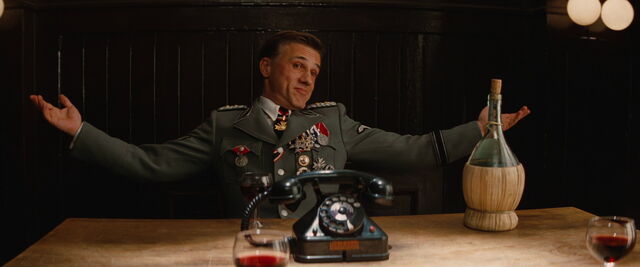
However, I was impressed with how in-depth he seemed to go into a particular scene and character. He extensively foes into detail about how important the first scene is to the movie, stating that it is "bleakly comic and incredibly suspenseful" and how it shows us that "words speak louder than action."On the same note, he praises Christoph Waltz's performance as the "silky, polyglot" SS officer, and villian, Hans Landa, citing his reasoning that "he is a man we will love to hate."
This guy.
Mr. Charity concludes by saying, "It's hard to see it converting many skeptics, but the filmmaker's fans should be more than satisfied, and curious newbies will discover a dense, literate, audacious and prodigious talent, still one of the best of his generation."
Now, with good praises there is always bound to be criticism.
The site that the review itself is published on is a local reporting site, offering many stories and reviews on various places, foods, news, and, of course, movies. But being on the "Top Critic" section of Rotten Tomatoes must've taken some bit of effort, so I gave it a chance and read it through.
Turns out, it was a double-review/comparison with Basterds on one end and some Danish movie called Flame and Citron on the other. She began with Basterds, and it didn't take long to realize that this wasn't his favorite movie. He writes as if this movie was a mediocre student assignment, going into detail of the references Basterds made to other movies rather than focusing on the film's own story. Right after, he singles out specific scenes that he thought was weird/stupid and explicitly tells us why he thought they were weird/stupid. He then ends the Basterds portion of the review in the strangest reference imaginable: "Remember the 'Royale with Cheese' routine in Pulp Fiction? They're inventing a new junk-food product line for Inglourious Basterds — the White Elephant Supreme."
...Um...McDonald's eat your heart out?
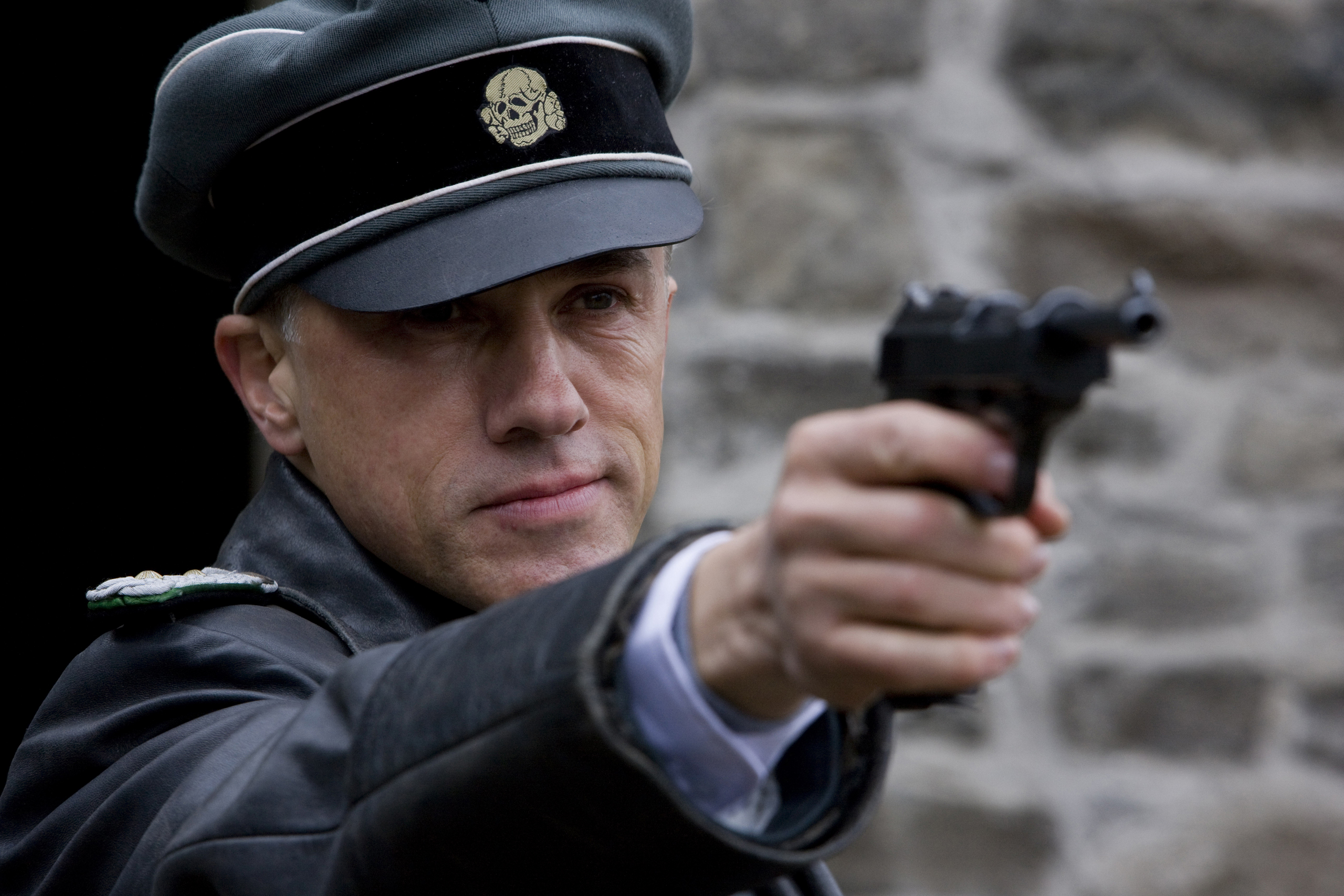
The next half of the review is just him gushing over this Danish movie Flame and Citron, which I didn't even know existed until this reviewer came along. I'm sure it's a fine movie, but I'm not going to go into that. The review was very biased and the author sounded very pretentious. The only plus I can give to the review was that it also praised Christoph Waltz for the "nutsy villain" Hans Landa.
This guy...again.
Now while there are many things I agree with in one review and not with the other, both at least said something that I myself feel confident in agreeing with. Tom Charity, remarking on the film's structure, said, "For two and a half hours in the dark, anything goes." I find that comment, whether it may be flattering or not, is very true in regards to the motif that the movie hammered into us. There are no set rules in a war. You want to win? You gotta play your cards right, even if that includes playing dirty (with lots of blood, of course, like any Tarantino movie). As for Kelly Vance's review? Well, he did have a point when she said, "Tarantino lavishes the same sort of attention on [Christoph Waltz] that he once devoted to Samuel L. Jackson." Did Waltz steal the spotlight? Yes. Was it partly due to Tarantino's direction. Absolutely. But that's not an issue in this case. Tarantino saw the power that Waltz was able to convey in his acting, he didn't want to miss an opportunity to showcase it. Which is what he did, and in the end we got the best Hans Landa that anyone could've asked for.
And again! This guy!
Now, bear with me if you may, but let's say that I was completely oblivious to this movie and the only two sources of review were these two articles. Which one would I be more convinced by? The CNN Special Tom Charity or the Danish-film-fanatic Kelly Vance? I definitely would've lean toward CNN's Tom. I know that Kelly was very vehement at times and very passionate about his knowledge of cinema, but his pretentiousness would've been a bit of a turn-off. That, and I'd honestly trust something coming from CNN rather than some local paper based out of Oakland.
If I had to write an effective review, I'd definitely include more than either of these reviews put out. One thing that neither of them mentioned was if the movie left an impact on them or the audience, and with a movie about war and killing Nazis that'd be a nice incentive for the clueless movie-goer if they want to gain something from watching it. I'd also like to add a bit more analysis rather than synopsis. Instead of droning on what it's about I'd say what about it is different and interesting, to spice it up a bit and give that "Ooooh, that sounds cool!" factor.
And, I'd definitely leave out any weird and contorted references to other movies. Especially if they relate to elephants.
"Did you order the White Elephant Supreme?"
But anyway, hopefully you gained something out of this when it comes to reading reviews. Look out for biased opinions and check for credibility. Do it, or else Hans Landa will crack down on you.